
Blog
Europe Swords

Blade: The Double-Edged Legend That Shaped Civilization
A sword is basically a long metal blade with a sharp edge and tip, with a handle on one side so you can hold it. But that description barely scratches the surface. The sword is more than just a weapon; it’s an extension of human will, a symbol of power, a showcase of craftsmanship, and something that can inspire fear. Since it was first created, this seemingly simple tool has been deeply woven into human warfare, politics, myths, and art. It can serve as the judge of justice in the hands of protectors or the tool of massacre for conquerors. The history of the sword is like a tiny epic of metalworking, military styles, social order, and even philosophical ideas, leaving countless marks of glory and bloodshed on the story of civilization with its cold edge.
Chaos Begins: From Dagger to Bronze Sword
The story of the sword doesn’t start with a heroic shout echoing through the clouds, but with a dull strike. Back in prehistoric times, our ancestors already knew how to use short stone or bone weapons for thrusting, but these tools were fragile and small, more like extended sharp teeth than real ‘swords.’ The sword had to wait for a key breakthrough: metal. Around 3300 BC, humans accidentally combined copper and tin, creating a new, stronger alloy—bronze. This discovery, like the spark stolen by Prometheus, instantly sparked a revolution in weapon-making. At first, craftsmen just made bronze daggers bigger. But they quickly ran into a problem: although bronze was harder than pure copper, if the blade was too long it would bend or break while swinging. So the earliest ‘swords’ were awkwardly shaped, rarely longer than 60 centimeters, more like big stabbing daggers than real swinging weapons. Archaeologists have found these early bronze swords in Crete and the Middle East during the Minoan civilization. They were elite symbols, luxuries for tribal leaders and royalty. Owning a bronze sword wasn’t just a battlefield advantage—it showed mastery of the latest tech and rare resources. Back then, swords were sacred, tied to power and social status, marking hierarchy and dominance. It was the dawn of a new era, where metal blades defined who was strong and who was weak.
Steel Torrent: How Swords Became Common and the Road to Empire
The bronze sword had its glory for almost two thousand years, but it had obvious downsides: tin was rare and costly, which kept this weapon from becoming common. Time moved on, and around 1200 BCE, a ‘materials revolution’ totally changed the sword’s story. People figured out how to smelt iron from iron ore. Iron was much more abundant than copper and tin, so making weapons became much cheaper. The sword slowly came down off its pedestal, shifting from being just for kings and nobles to something regular soldiers could use. This change led to the rise of truly professional armies and set the stage for huge empires to emerge.
Discipline and Efficiency of Roman Daggers
The Romans were the ones who really made the most of the iron sword. They didn’t care about sword length or fancy designs—they went for pure practicality: the Gladius Hispaniensis, the famous Roman short sword. It was about 50 to 60 centimeters long, with a broad blade that could pierce lethally. Roman legions would form tight phalanxes with their big shields (scutum), and they’d thrust those short swords quickly and repeatedly through the gaps in the shields. This wasn’t about flashy one-on-one duels, but big, disciplined infantry battles. Every poke of the Roman short sword was basically an extension of imperial power, law, and well-organized violence. Simple, efficient, deadly—that’s the Roman spirit in a weapon. With this modest short sword, Roman legions swept across the Mediterranean and built an empire like no other.
The Wild Side of Barbarian Longswords
Unlike the controlled, precise Roman short swords, the Celts and Germans—called ‘barbarians’ back then—had these big, heavy longswords. They were made for swinging, great for charging and fighting in open fields. They reflected a totally different approach to battle: all about personal courage and raw strength. While this style didn’t always work against the disciplined Roman phalanx, after Rome fell, the emphasis on chopping and slashing swords helped shape medieval European sword traditions.
The Golden Age: The Art of Knights, Samurai, and Swords
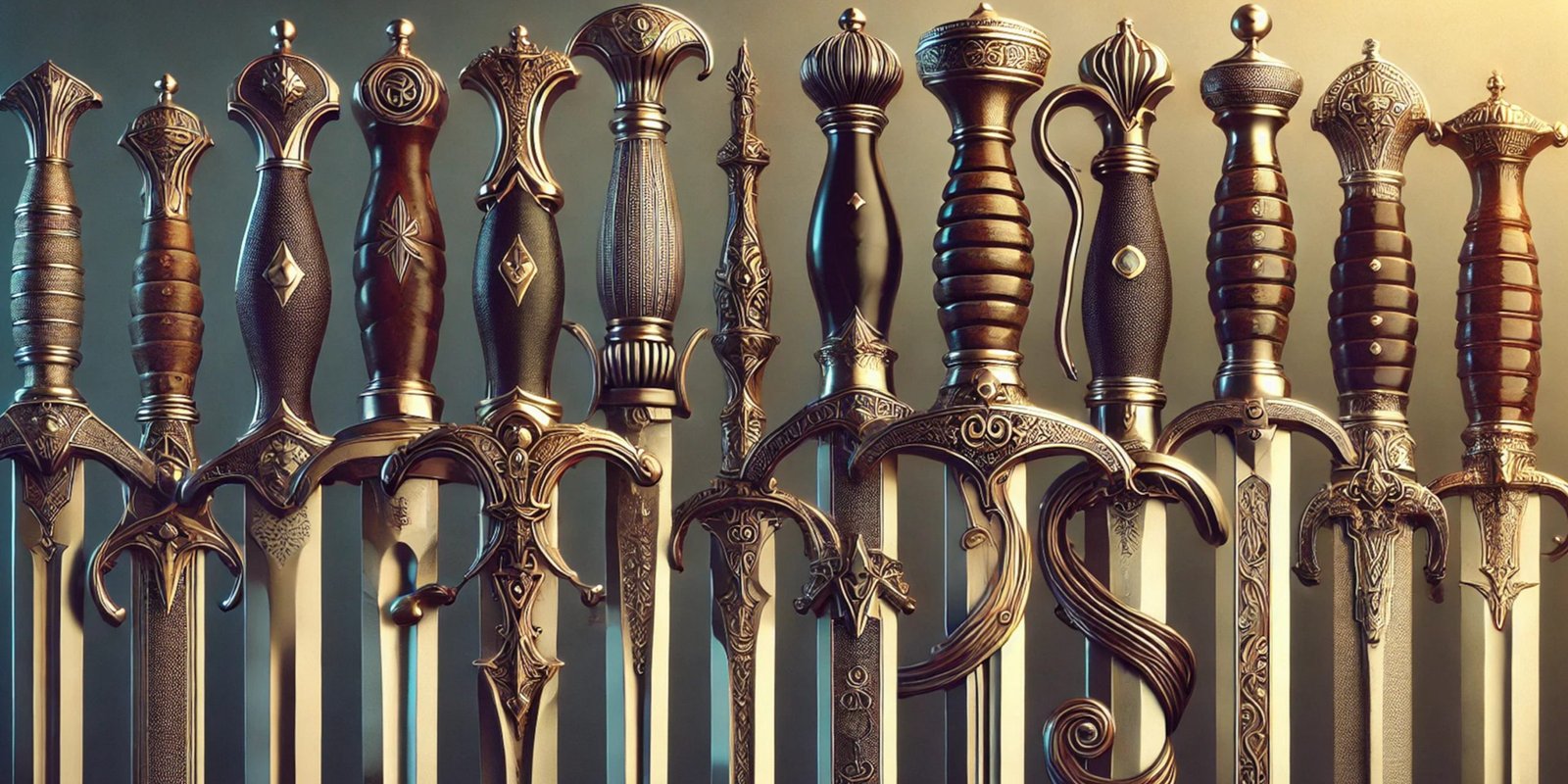
If the Iron Age made swords common, the Middle Ages was really the golden age when sword culture and craftsmanship were at their peak. During this time, swords and armor kind of went head-to-head in a centuries-long “arms race.” With chainmail and plate armor coming into play, just swinging or stabbing your sword wasn’t enough anymore. So swords started to get really specialized and varied to beat the defenses.
Arming Sword: A classic one-handed sword from the early Middle Ages, usually used with a shield, it was the basic setup for knights.
Longsword: Also called the “half-hand sword,” it could be held with one or both hands, mixing chopping and thrusting, and led to really advanced combat techniques.
Greatsword: A full two-handed weapon with huge reach and armor-piercing power, earning it the nickname “Infantry Reaper” on the battlefield.
In Europe, swords were tied to the spirit of chivalry, symbolizing loyalty, honor, and faith. When knights were knighted, the monarch lightly tapped their shoulder with a sword; at court, putting your hand on the hilt and swearing an oath was the most serious promise you could make. Swords weren’t just weapons anymore; they had a soul and sometimes even names, like Roland’s “Durandelle” or King Arthur’s “Sword in the Stone.”
Far in the East, Japanese swordsmiths took forging swords to an almost religious art form. By folding and forging thousands of times, they created the world-famous katana. This single-edged, curved sword has a hard edge but a flexible blade, achieving a perfect balance of strength and flexibility. For samurai, the sword was their very soul, representing their whole identity and honor. The katana came with its own set of rituals, philosophy, and martial arts, making it the pinnacle of Eastern sword culture.
The swan song in the afterglow: a graceful moment in the age of guns
Just as sword-making and the culture around it reached their peak, a loud bang marked the end of their dominance. Gunpowder came to Europe from the East and started being used in muskets and cannons. At first, firearms were slow and inaccurate, so swords were still useful on the battlefield. But as technology sped up, the firepower of musket formations eventually replaced knights’ charges. Facing a dense hail of bullets, even the best armor and most skillful swordplay seemed useless. The sword, which had ruled the battlefield for nearly three thousand years, had to step back from the military spotlight. But swords didn’t disappear—they just went through their biggest transformation, shifting from front-line fighters to supporting roles and symbols.
Rapier: In 16th- and 17th-century Europe, as heavy armor faded out, a lighter, longer, and faster sword designed for thrusting became popular. It was used in duels between citizens and nobles, leading to elegant and deadly fencing styles.
Saber (Saber/Sabre): By modern times, cavalry still carried curved sabers for charges, but mostly for show—they weren’t that useful in combat anymore.
Rituals and Etiquette: Swords showed up more in military parades, awards, and diplomatic events, becoming symbols of national power and military honor that still exist today.
After leaving the battlefield, swords found a new life in folk traditions. They evolved into modern fencing, keeping the art of combat alive in the form of foil, épée, and saber. They also appear in plays, movies, and books, continuing to symbolize heroism and adventure.
The Eternal Symbol: When the Blade Becomes a Legend
Looking back at the long journey of the sword, it started as just an ordinary piece of bronze and gradually took on countless forms alongside human civilization. It was once a powerful tool for expanding empires and a matter of faith for knights. It served as a sanctuary for warriors’ souls and a means for gentlemen to protect their honor. Nowadays, swords have mostly been replaced by modern weapons, but their mark on our culture has never disappeared. When we look at a sword, we see more than just an ancient weapon—we see all the history it carries: bravery, power, skill, destruction, glory, and legend. It may sit quietly in a museum case; even if its edge has dulled, it still tells the story of that heroic time shaped by steel and determination. The life of a sword as a weapon might be over, but as a cultural symbol, it’s become immortal.